Bedding care
Vispring Lux Skirted Bedding: Fit, Fabric, and Care
A well-made mattress protector should feel like a considered part of the bed, not an interruption to it. The Vispring Lux Skirted Mattress Protector combines a cotton outer, British wool filling, and an elasticated skirt. Knowing how those elements work—and how to measure, wash, and dry the piece—helps you maintain its fit and feel over time.
Published October 18, 2026
A protective layer with a softer presence
A mattress protector has a practical brief: to help shield the mattress from everyday perspiration, body oils, dust, and occasional spills. Yet the most useful bedding is also the bedding that sits comfortably within a sleep system. Its surface should not introduce distracting bulk, its shape should stay composed beneath the sheet, and its care routine should suit the household that uses it.
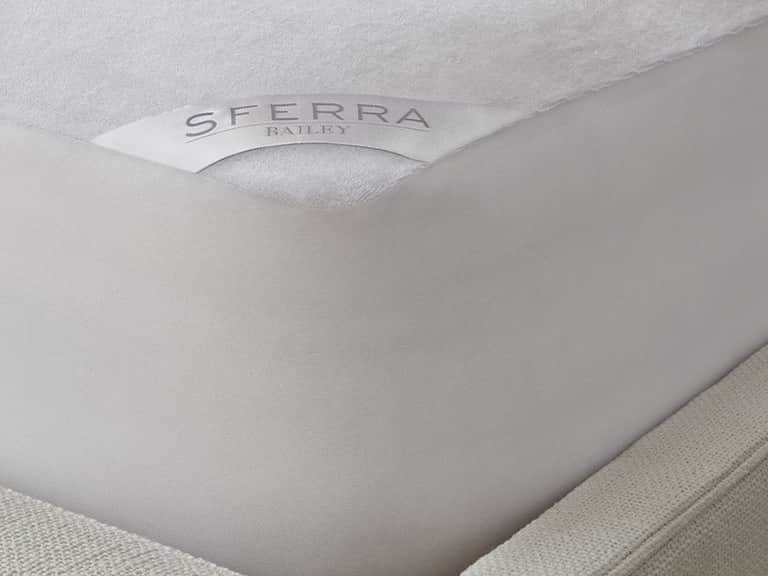
The Vispring Lux Skirted Mattress Protector approaches protection as a softly layered textile. Its cotton outer provides the familiar touch of a natural fabric, while British wool filling gives the pad its lightly cushioned character. A fitted construction and fully elasticated skirt help hold the protector in place around the mattress. These are simple design choices, but together they determine how the piece behaves once the bed is made and night after night of use begins.
It is helpful to distinguish a mattress protector from a mattress pad. The terms are sometimes used interchangeably, but a pad often suggests a more substantial comfort layer, while a protector’s principal role is to help guard the mattress. The Lux design has a quilted, filled construction, so it brings a degree of softness as well as a protective layer. It is not described as waterproof, and should not be treated as a liquid-proof barrier.
That distinction matters when choosing bedding. A wool-filled, cotton-covered protector may suit someone looking for a natural-fiber layer and a more cushioned surface. A household that needs dependable containment for spills may have different requirements and should check product specifications carefully before relying on any textile as a moisture barrier.
Understanding the cotton outer and British wool filling
Cotton: a breathable, familiar surface
Cotton is widely used in bedding because it is soft to the touch and comfortable against the body. In the Vispring Lux protector, cotton forms the outer fabric surrounding the filling. This surface helps create a textile layer between the sleeper and the mattress, while keeping the construction in the realm of traditional bedding rather than a plastic-feeling cover.
Fabric performance depends on more than the fiber name. Weave, finishing, thickness, quilting, and the way the protector is laundered all affect its eventual hand and appearance. Cotton can absorb moisture, which is one reason care instructions advise avoiding products that may leave a coating on the fabric. Fabric softeners and dryer sheets, for example, can affect absorbency and the way fibers feel. For everyday upkeep, follow the product’s stated instructions rather than assuming that every cotton item can be washed in the same way.
British wool: loft and natural character
The filling is British wool, a resilient natural fiber that gives the protector a softly padded profile. Wool fibers have a spring-like structure, helping them recover from light compression and contributing loft within a quilted bedding layer. Wool is also valued in bedding for its ability to interact with moisture and warmth, though the comfort a person experiences depends on the whole sleep setup, room conditions, mattress, sheets, and individual preferences.
Natural filling does not mean care-free filling. Wool can be sensitive to excessive heat, rough agitation, and unsuitable detergents. A careful wash and measured drying approach help limit unnecessary stress on the fibers and the cotton shell. The goal is not to make the protector feel newly manufactured after every wash; it is to keep it clean while preserving the structure that makes it comfortable to use.
The Lux protector’s listed care guidance recommends a gentle machine wash in cold water with like colors and a natural detergent. It advises against bleach and whiteners, suggests non-chlorine alternatives when necessary, and recommends line drying or low tumble drying. These details are more useful than a generic assumption that a washable mattress protector can tolerate a hot, intensive laundry cycle.
Fit begins with measurement
A fitted protector can only perform as intended when it suits the mattress dimensions. The Vispring Lux design has a secure pocket and a fully elasticated skirt, and its stated pocket depth is 13.75 inches. Before dressing the bed, measure the mattress rather than relying only on its standard size label. Two mattresses sold under the same size name can differ in height, especially when one has a pillow top, built-in comfort layer, or other raised profile.
Measure the mattress length and width across the top, then measure its height from the foundation of the mattress to the uppermost sleeping surface. Include any permanently attached pillow top or sewn-on comfort layer. Do not include a separate mattress topper unless the protector is intended to fit over it; if you plan to cover both mattress and topper, measure the combined depth and confirm that the skirt can accommodate it.
The pocket measurement is a useful reference, not an invitation to stretch fabric beyond its intended range. A mattress that is appreciably deeper than the stated pocket may pull at the seams or elastic, while a protector that is too large can shift, crease, or gather under the fitted sheet. A good fit should feel secure without requiring forceful tugging at the corners.
A quick fit checklist
- Confirm the mattress size and measure its actual length and width.
- Measure depth from the mattress base to the top sleeping surface.
- Include any attached pillow top or integrated comfort layer.
- Compare the measured depth with the stated 13.75-inch pocket.
- Check that the skirt can reach beneath the mattress without strain.
- After fitting, smooth the surface and check for tension, folds, or exposed corners.
For a straightforward fitting, lay the protector flat and identify its orientation before lifting it onto the bed. Align the corners with the mattress, then ease the elasticated skirt into position rather than dragging it sharply across the fabric. Once it is on, run a hand across the top to settle the padding and check that the skirt sits evenly around the perimeter. The fitted sheet can then go on as usual.
After the first night, it is worth checking that the protector has not crept or bunched. A small adjustment is normal as bedding settles, but persistent movement can point to a size or depth mismatch, an unusually slippery mattress surface, or a protector that has not been positioned evenly. Correcting the fit early is gentler on the elastic and more comfortable beneath the sheet.
How the skirted construction works
The term “skirted” describes the fabric sides that extend around the edge of the protector and fit down over the mattress. On the Lux design, the skirt is fully elasticated, helping the protector stay in place as the bed is used. Compared with corner straps alone, an elasticated skirt wraps the mattress perimeter and can create a more continuous, tidy fit.
This construction is useful, but it does not make the protector universal. Mattress depth, corner shape, and the presence of a topper all influence the final fit. The elastic should secure the piece without being overstretched. If installation feels difficult, pause and check the orientation and measurements instead of pulling harder; tension concentrated at one corner can affect both the fit and the fabric over time.
A fitted protector is also not an encasement. It covers the top and sides but does not fully enclose the mattress with a zipper. Those formats serve different purposes. A skirted pad is designed for convenient placement and routine removal, while a full encasement provides coverage around the mattress. The right construction depends on the care needs of the bed and the level of coverage required.
A considered care routine
Good cotton bedding care is less about frequent, aggressive washing and more about following the maker’s instructions consistently. The Vispring Lux care guidance recommends monthly washing. It specifies a gentle cycle in cold water, washing with like colors, and using a natural detergent. Bleach and whiteners should be avoided; if an alternative is needed, the guidance calls for a non-chlorine option. These directions help keep the cleaning process measured for both the cotton outer and wool filling.
Before washing, check the care label and your machine’s capacity. A filled mattress protector can be bulky when wet, and crowding the drum may prevent it from moving freely. If the item does not fit comfortably, do not compress it into the machine. A cleaner wash and a more even rinse are preferable to forcing an oversized piece through a cycle that strains its seams or leaves detergent behind.
Use a gentle program and avoid adding fabric softener or dryer sheets unless the manufacturer specifically permits them. These products can leave residue on fibers and may alter absorbency. Use detergent sparingly according to the product directions and water conditions, since excess detergent can be difficult to rinse from a thick textile layer.
For drying, the stated options are line drying or tumble drying on low. Line drying allows the protector to dry without extended exposure to high heat; support the weight evenly and avoid hanging it in a way that pulls on a single point. If using a dryer, select low heat and remove the protector promptly when dry. High heat can place unnecessary stress on elastic, cotton, and wool, and may contribute to shrinkage or changes in texture.
Make sure the protector is fully dry before putting it back on the bed. A thick, filled layer can retain moisture within its quilting even when the surface feels dry. Allowing it to air out thoroughly reduces the chance of trapping dampness beneath the sheet. Do not store it folded away while it is still moist.
Care at a glance
- Wash monthly as recommended in the product guidance.
- Use a gentle machine cycle with cold water and like colors.
- Choose a natural detergent and avoid bleach and whiteners.
- Skip fabric softener and dryer sheets unless the care label says otherwise.
- Line dry or tumble dry on low heat.
- Wait until the protector is completely dry before remaking the bed or storing it.
Protecting the protector between washes
A calm maintenance routine can help reduce wear. When changing sheets, take a moment to smooth the protector and check that the elasticated skirt remains in position. If the bed is used every night, this brief inspection can reveal small shifts before they become persistent creases. Keep sharp objects, snagging fasteners, and rough handling away from the fabric when removing it for laundering.
For small marks, consult the care label before treating the area. Avoid vigorous rubbing, which can disturb the surface or push a stain deeper into the fibers. Do not apply a stain remover or cleaning solution without checking that it is suitable for the cotton and wool construction. When in doubt, follow the manufacturer’s care guidance or seek appropriate textile-care advice rather than experimenting with a strong chemical treatment.
Wool-filled bedding may have a natural fiber character, and its loft can change gradually with use. Gentle handling, an appropriate wash cycle, and low-temperature drying help avoid unnecessary compression and heat exposure. If the filling appears uneven after washing, allow the protector to dry fully and settle before evaluating its shape. Avoid twisting or wringing it to remove water.
What this design can—and cannot—promise
The Lux Skirted Mattress Protector is described as a washable, hygienic barrier against everyday spills, stains, body oils, and perspiration. Its cotton outer, British wool filling, and fitted design make it a particular kind of bedding layer: soft, natural-fiber, and intended to help preserve the mattress while adding a little cushioning. Those features do not establish that it is waterproof, allergen-proof, or suitable for every special-care need.
When a household needs a liquid barrier, it should look specifically for clear waterproof specifications. When full mattress enclosure is required, a zippered encasement is a different product category. And if a mattress maker has detailed warranty requirements, check those terms before selecting any cover or pad. A protector is most useful when its intended function matches the actual concern.
It is also worth considering the bedding already on the bed. A thick protector can slightly change the feel of the sleep surface, while a thin fitted layer may be less noticeable. The Lux construction includes wool filling, so those who prefer an almost imperceptible barrier may want to think carefully about whether a quilted pad is the right style. Personal comfort is subjective; the stated materials and construction are more reliable guides than broad claims about how any fabric will feel for every sleeper.
Questions to consider before use
Will it fit a deep mattress?
Its stated pocket depth is 13.75 inches. Measure the mattress, including any attached pillow top or integrated comfort layer, and compare the result with that specification. A separate topper may change the fit if you plan to cover both layers.
Is the protector waterproof?
The available product details describe a cotton outer and British wool filling but do not identify a waterproof membrane. It should not be relied on as a waterproof barrier unless current manufacturer information confirms that feature.
How should it be washed?
The stated instructions recommend a gentle cold wash with like colors and natural detergent. Avoid bleach and whiteners, and use line drying or low tumble heat. Always check the attached care label before laundering.
Can it be tumble dried?
Low tumble drying is listed as an option. High heat is not recommended in the care guidance. Remove the protector promptly and make sure it is completely dry before placing it back on the mattress.
Does wool require special attention?
Wool benefits from gentle treatment. Avoid rough agitation, wringing, and excessive heat. The product’s care instructions provide the best starting point for preserving the filling and cotton shell together.
The quiet luxury of good bedding care
In a thoughtfully made bed, the details are often subtle: a fitted edge that stays smooth, a soft layer that does not overwhelm the mattress, and materials that feel considered in daily use. The Vispring Lux Skirted Mattress Protector brings those details together through cotton, British wool, and an elasticated skirt. Its appeal lies less in elaborate claims than in the balance of a natural-fiber surface, gentle cushioning, and a practical fitted form.
Measure before fitting, treat the fabric with care, and follow the recommended cold, gentle wash and low-heat or line-dry routine. These habits help maintain the protector’s shape and condition while keeping its role clear: a washable layer intended to help shield the mattress from everyday use. In bedding, elegance is often the result of good judgment—choosing the right construction for the bed, and caring for it with the same attention given to the rest of the room.

