Nursery bedding · Practical care
Flat or Fitted? Choosing a Crib Pad for Nursery Care
A crib pad may help shield a mattress from everyday moisture, but its shape matters. Flat and fitted designs sit differently beneath a sheet, and the right choice begins with safe placement, a close fit, and care instructions you can follow consistently.
Published November 3, 2026
Nursery care often comes down to details that are easy to overlook: a sheet that stays smooth, a mattress that fits the crib frame, a pad that can be cleaned when life gets messy. A crib mattress pad is one such detail. It can help protect the mattress from small spills and routine moisture, yet the word “pad” covers more than one construction. Some designs lie flat on the mattress; others are shaped with elastic to fit around it.
That distinction is practical, not merely aesthetic. A flat crib pad depends on correct layering and placement, while a fitted crib pad is designed to stay in position around the mattress. In either case, nursery bedding must be chosen and used with current safe-sleep guidance in mind. The crib mattress should remain firm and flat, and the fitted sheet should sit snugly. A pad should never create a loose, soft, uneven, or shifting sleep surface.
For families comparing a Naturepedic crib pad or another mattress-protection option, look beyond the silhouette. Dimensions, materials, intended placement, laundering instructions, and the condition of the mattress all matter. The most suitable choice is not necessarily the one with the most features; it is the one that fits the sleep setup safely and can be cared for as directed.
What is a crib mattress pad?
A crib mattress pad is a layer intended to sit between the mattress and fitted sheet. Depending on its design and materials, it may absorb some moisture, provide a washable surface, or help reduce routine wear on the mattress cover. It is not a substitute for a properly fitting sheet, and it should not alter the firm, level surface the mattress is designed to provide.
The term can be confusing because it is sometimes used for products with different shapes, thicknesses, and purposes. A thin protective pad is not automatically the same as a cushioned topper. Before using any nursery bedding accessory, check the manufacturer’s description and instructions, including whether the item is meant for a crib mattress and how it should be positioned. If its intended use is unclear, contact the manufacturer rather than improvising a layering arrangement.
Flat and fitted crib pads: the essential difference
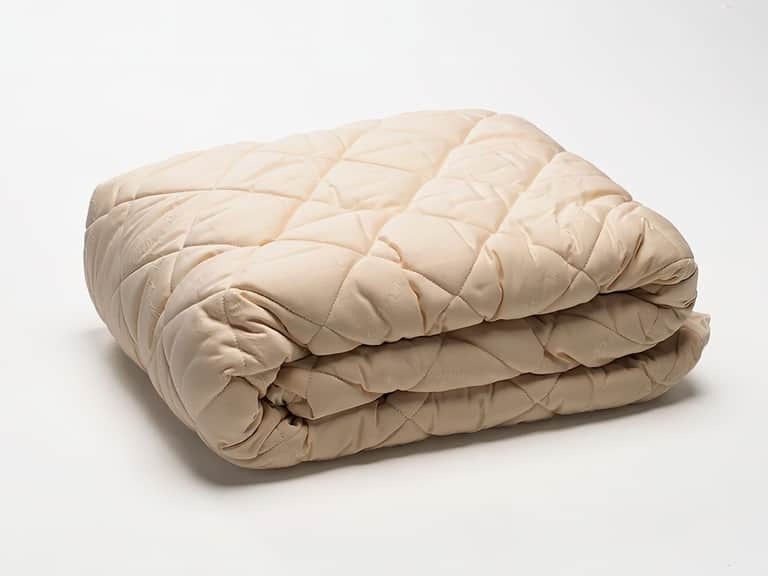
A flat crib pad is a rectangular layer without a fitted skirt or elasticized sides. It rests on top of the mattress and beneath the fitted sheet. Its position depends on the way the bedding is made and secured, so dimensions and correct installation deserve close attention. A pad that is too small may leave portions of the mattress unprotected; one that is too large may fold or bunch.
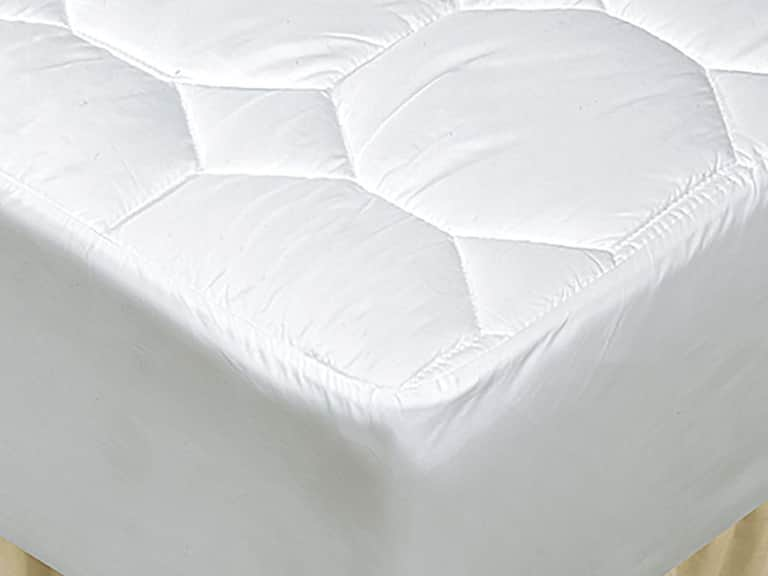
A fitted crib pad is shaped to surround or grip the mattress, often with elastic around the edges or corners. That construction is intended to help it remain in place during ordinary use. It still needs to match the mattress dimensions and be installed as directed. “Fitted” should not be taken to mean that every size will work: mattress thickness, edge design, and the product’s stated measurements can affect the fit.
| Consideration | Flat crib pad | Fitted crib pad |
|---|---|---|
| How it sits | Lies on the mattress beneath the fitted sheet. | Uses elastic or shaped edges to hold around the mattress. |
| Fit to check | Length and width, plus whether it lies flat without excess fabric. | Length, width, mattress depth, and how securely the edges sit. |
| Common care question | Does the pad stay flat and in its intended position? | Does the elastic retain a secure fit after washing? |
| Before use | Follow product instructions and safe-sleep guidance. | Confirm the product is designed for the particular crib mattress. |
This comparison is a starting point, not a safety certification. Product construction varies, and the manufacturer’s instructions should determine how a particular crib pad is used. If a pad shifts, wrinkles, pulls free, or changes the mattress surface, stop using it until the fit and suitability are clarified.
Start with safe sleep and the mattress itself
In an infant sleep space, safety takes priority over convenience, softness, or a particular fabric preference. Follow current guidance from recognized public-health and pediatric safety authorities. Use a firm, flat mattress that fits the crib, with a fitted sheet made for that mattress. Keep the sleep area free of loose bedding and other items that are not recommended for infant sleep. A protective layer should never be used in a way that compromises these basics.
Check the mattress and crib manufacturer’s instructions before adding a pad. Some mattresses have specific care requirements or restrictions on additional layers. Verify that the mattress remains level and that the crib’s fitted sheet can still be secured snugly after the pad is installed. If the sheet no longer fits correctly, the pad is too bulky, or the combination creates folds or gaps, do not use that combination.
This is especially important when a nursery includes a waterproof barrier or a thicker, quilted design. A waterproof feature does not make a product appropriate for every sleep surface, and a soft or padded feel should not be confused with a safer one. Choose only items clearly intended for the crib mattress in question, and follow all use and care directions.
How to compare a Naturepedic crib pad
When evaluating a Naturepedic crib pad, begin with the exact model and its intended placement. Product names can sound similar while describing different constructions. A flat waterproof crib mattress pad, for example, is not installed in the same manner as a fitted waterproof crib mattress pad. Read the product details rather than relying on a category label or a general description of crib bedding.
Naturepedic’s flat and fitted waterproof crib pad options are described as having a soft organic cotton flannel surface, an organic cotton backing, and a thin waterproof layer between the fabrics. The fitted version is described as having elastic around the edge for a close fit. Both descriptions identify a standard crib size of 28 by 52 inches. These details help explain the difference in construction, but they do not remove the need to measure the mattress and review the current manufacturer’s directions before use.
Look for the following information when comparing models:
- Dimensions: Confirm the pad’s length and width against the crib mattress specifications. Do not assume that a standard label guarantees an exact match.
- Shape and attachment: Determine whether the product is flat or fitted and how it is meant to remain in place.
- Materials: Review the listed face fabric, backing, waterproof layer, and any other components. A material description is useful context, but it does not replace a fit check.
- Care directions: Check washing and drying guidance, including temperature, cycle, and whether the pad may be machine dried.
- Compatibility: Consider mattress depth, construction, and the fitted sheet used with it. Follow both mattress and pad instructions.
- Product condition: Inspect seams, elastic, and the waterproof layer over time. Replace a damaged or poorly fitting pad according to the manufacturer’s guidance.
A brand name alone cannot tell you whether a particular crib pad will suit your nursery. The exact model, current instructions, and the physical fit on the mattress are the decisive details.
Materials: comfort, moisture, and maintenance
Fabric choices influence how a pad feels and how it is maintained. Cotton is commonly used for the surface of crib pads because it is familiar, washable, and comfortable to the touch. In a layered waterproof design, the cotton fabric and the barrier perform different roles: the outer textile provides the sleeping surface, while an internal layer is intended to limit liquid passage. Construction and care vary by product, so check the label for the specific item.
Organic certification claims should be read precisely. A certification may apply to particular fibers, processing stages, or the finished textile; the product documentation should say what is certified. “Organic” does not, by itself, establish waterproof performance, mattress compatibility, or suitability for a particular infant sleep setup. Those are separate questions to verify.
Breathability, absorbency, and liquid resistance are also distinct properties. A fabric may feel airy yet not be waterproof; another may block liquid while requiring special washing. Rather than infer performance from a material’s name, use the product’s stated construction and care instructions. Avoid making a pad more protective by adding unapproved layers or treating it with sprays or chemicals.
A careful fit check, step by step
- Read the product directions. Confirm that the crib pad is intended for a crib mattress and identify whether it is flat or fitted.
- Measure the mattress. Use the mattress manufacturer’s stated dimensions and, where relevant, its depth. Compare them with the pad’s specifications.
- Inspect the pad. Before installation, check for loose threads, damaged seams, stretched elastic, bunching, or signs of wear.
- Position it as directed. Lay a flat pad evenly or fit an elasticized pad around the mattress. Do not fold excess material under the mattress unless the product instructions explicitly require it.
- Add the fitted sheet. The sheet should remain snug and smooth. Check that it is secured correctly at each corner and that the pad has not caused it to loosen.
- Recheck the sleep surface. If the pad shifts, wrinkles, creates a gap, or makes the mattress feel less firm or level, remove it and reassess compatibility.
Repeat the check after laundering and whenever bedding is changed. Washing can affect fabric dimensions or elastic, even when an item is designed to be washable. A fit that was secure before cleaning should not be assumed to remain secure afterward.
Crib pad care: a simple, consistent routine
Good crib pad care is less about elaborate cleaning rituals and more about following the product label. Use the recommended wash cycle, water temperature, detergent guidance, and drying method. High heat, bleach, fabric softener, or an unsuitable cycle can damage textiles or a waterproof layer, depending on the product. Do not apply a method simply because it works for another item in the nursery.
After washing, inspect the pad before returning it to the crib. Look for changes in dimensions, puckering, delamination, damaged stitching, persistent odors, or elastic that no longer holds. Allow the item to dry fully according to its care instructions. Damp bedding should not be placed back in the sleep space.
It is useful to keep a clean spare fitted sheet available so a wet or soiled sheet can be changed promptly. Any additional pad or layer used during a change must also be suitable for the crib and installed according to its directions. If the mattress itself is wet, follow the mattress manufacturer’s cleaning and drying guidance rather than covering the moisture with fresh bedding.
A regular inspection can be folded into routine nursery maintenance: check the pad and sheet whenever the bedding is changed, and review the manufacturer’s care instructions when a stain or spill occurs. Replace an item that is torn, no longer fits, or has a barrier that appears to be failing.
Flat or fitted: which features matter most?
A flat crib pad may appeal to caregivers who want a simple rectangular layer, but its dimensions and placement need particular attention. It must lie as intended, without excess fabric or folds, beneath a properly secured fitted sheet. If it will not stay flat or the sheet becomes loose, that setup is not appropriate.
A fitted crib pad offers an elasticized or shaped edge designed to hold around the mattress. This can make installation more straightforward, but only when the measurements correspond to the mattress and the elastic remains in good condition. A fitted design is not automatically safer or more effective than a flat one; correct fit and use matter more than the label.
For either style, the useful questions are straightforward: Is it designed for this mattress? Does it lie smooth and remain in place? Can the fitted sheet still be secured snugly? Can it be washed and dried according to instructions? If any answer is uncertain, pause before using it and seek clarification from the manufacturer or a qualified safety professional.
Common mistakes to avoid
- Choosing by size name alone. Verify dimensions instead of assuming that every “crib size” item fits every mattress.
- Using a pad that bunches. Wrinkles, folds, or shifting indicate that the fit or installation should be reassessed.
- Adding layers for extra cushioning. Do not use a crib pad as a topper or add unapproved bedding to change the mattress feel.
- Ignoring the sheet after installation. A snug sheet before adding a pad may fit differently once the extra layer is in place.
- Assuming waterproof means universal protection. A barrier does not make a pad compatible with every mattress or sleep arrangement.
- Skipping inspection after washing. Check the fit, elastic, seams, and surface condition each time the pad returns to the crib.
A concise nursery checklist
- The pad is clearly intended for a crib mattress.
- The product’s measurements correspond to the mattress.
- The pad is installed in the manufacturer’s stated position.
- There is no bunching, folding, shifting, or loose excess fabric.
- The fitted sheet remains snug and secure over the mattress.
- The mattress remains firm, flat, and level.
- Care directions are available and can be followed.
- The pad is clean, fully dry, and free of damage before use.
Frequently asked questions
Can a flat crib pad be used under a fitted sheet?
Some flat crib pads are designed to be placed beneath a fitted sheet, but the product’s instructions should confirm the intended use. It must lie flat and not loosen the sheet or create folds. Follow current safe-sleep guidance and the crib, mattress, and pad manufacturers’ directions.
Does a fitted crib pad stay in place better?
A fitted design uses elastic or shaped edges to grip the mattress, which is intended to help it stay positioned. The actual fit depends on dimensions, mattress depth, construction, and the condition of the elastic. Check it after installation and after every wash.
What should I check when comparing Naturepedic crib pad options?
Compare the exact model, flat or fitted construction, dimensions, materials, waterproof-layer description, intended placement, and care instructions. Naturepedic’s described flat and fitted crib pad options share a stated 28-by-52-inch size, while the fitted design is described with elastic around the edge. Confirm current product details and compatibility with your mattress before use.
How often should a crib pad be washed?
Follow the care instructions for the specific product and wash it when it becomes soiled or when the manufacturer recommends cleaning. After laundering, ensure it is fully dry and inspect it for shrinkage, damage, or changes in fit before putting it back on the mattress.
Can a mattress pad make a crib mattress softer?
A pad may change the surface feel, particularly if it is thick or quilted. In an infant sleep space, avoid adding a layer that makes the mattress soft, uneven, or less firm. Use only a product intended for the mattress and consistent with current safe-sleep recommendations.
The final word
Choosing between a flat and fitted crib pad is a matter of construction, dimensions, and reliable care—not simply appearance. A flat design should lie evenly beneath the sheet; a fitted design should grip the mattress without strain or looseness. Either way, the fitted sheet must remain snug, the mattress firm and level, and the sleep space consistent with current safe-sleep guidance. Read the product directions, check the fit after laundering, and let everyday practicality—not extra padding or decorative appeal—guide nursery bedding decisions.